

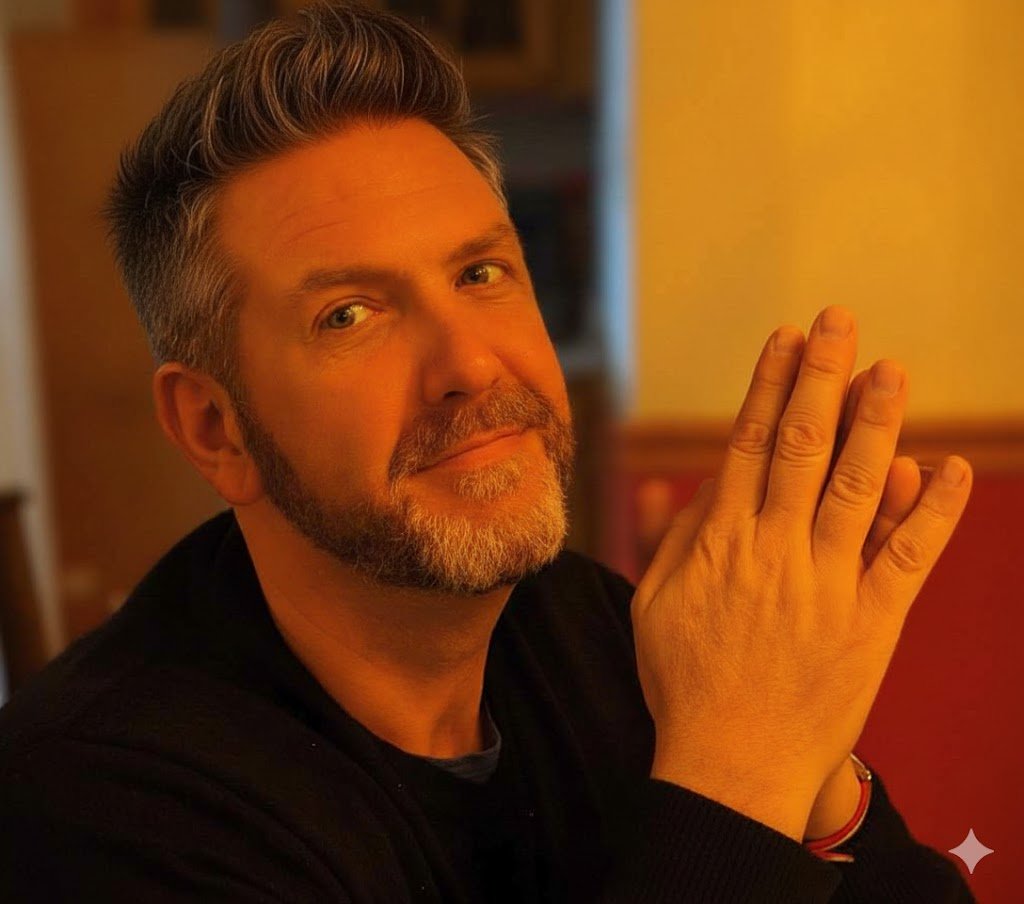
Welcome
I’m Marc.
Take a breath.
You’re in the right place.
If you’re facing a major life transition — loss, caregiving, illness, or a moment when life has tipped sideways — this page was created for you.
My name is Marc Messinger, and I help people navigate the moments no one ever prepares for — the moments when life turns without warning. I built this page because I’ve lived those moments myself in Southeastern Wisconsin. And if you’re here, you might be living them too.
INTRODUCTION
My Story
Part 1 The Years I Lost Control
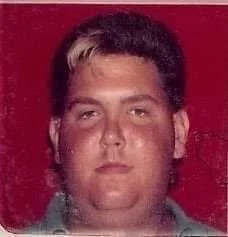
Sixteen years old, Visually impaired, Deaf, Lost. This is where the framework for my life began.
The First Time I Lost Control
There are years that shape you quietly, and years that shake you to your core. For me, the first time I truly lost control was the year I turned sixteen.
I woke up on my birthday and couldn't hear well. Within days, it was like someone was slowly closing the blinds over my eyes. My world went dark and silent. Panic took over. I felt like Helen Keller — trapped inside my own mind, desperate to understand what was happening.
I was shuffled between hospitals — first West Allis, then a rehab center that looked more like a nursing home than a place for a teenager. Most of the patients were in their eighties and nineties. I remember the smell of antiseptic and loneliness. Eventually, I was sent to Marshfield Clinic, and finally to Mayo Clinic, where the poking and prodding felt endless.
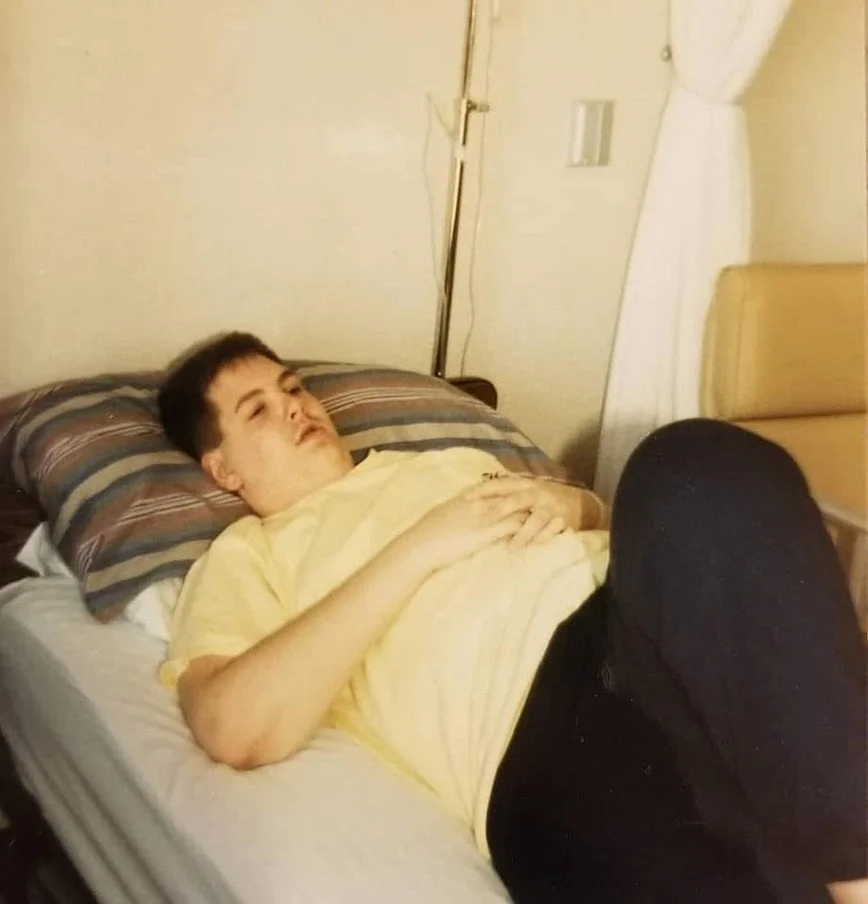
One of the countless nights where I learned that control isn’t something you hold — it’s something you navigate
They diagnosed me with Lyme disease and spinal meningitis. Steroids, tests, wires — all part of trying to save what was left of me. My vision came back first, then slowly, pieces of sound. But even as I began to heal, I was changed. I wore hearing aids that squealed and whined, a constant reminder that life could tilt without warning.
Lying in that hospital bed, I learned something that would stay with me forever: we can't control results — only our effort, our attitude, and our faith.
I didn't know it then, but that season was building something deep inside me — a framework for survival. A way to find meaning in pain and rebuild from within.
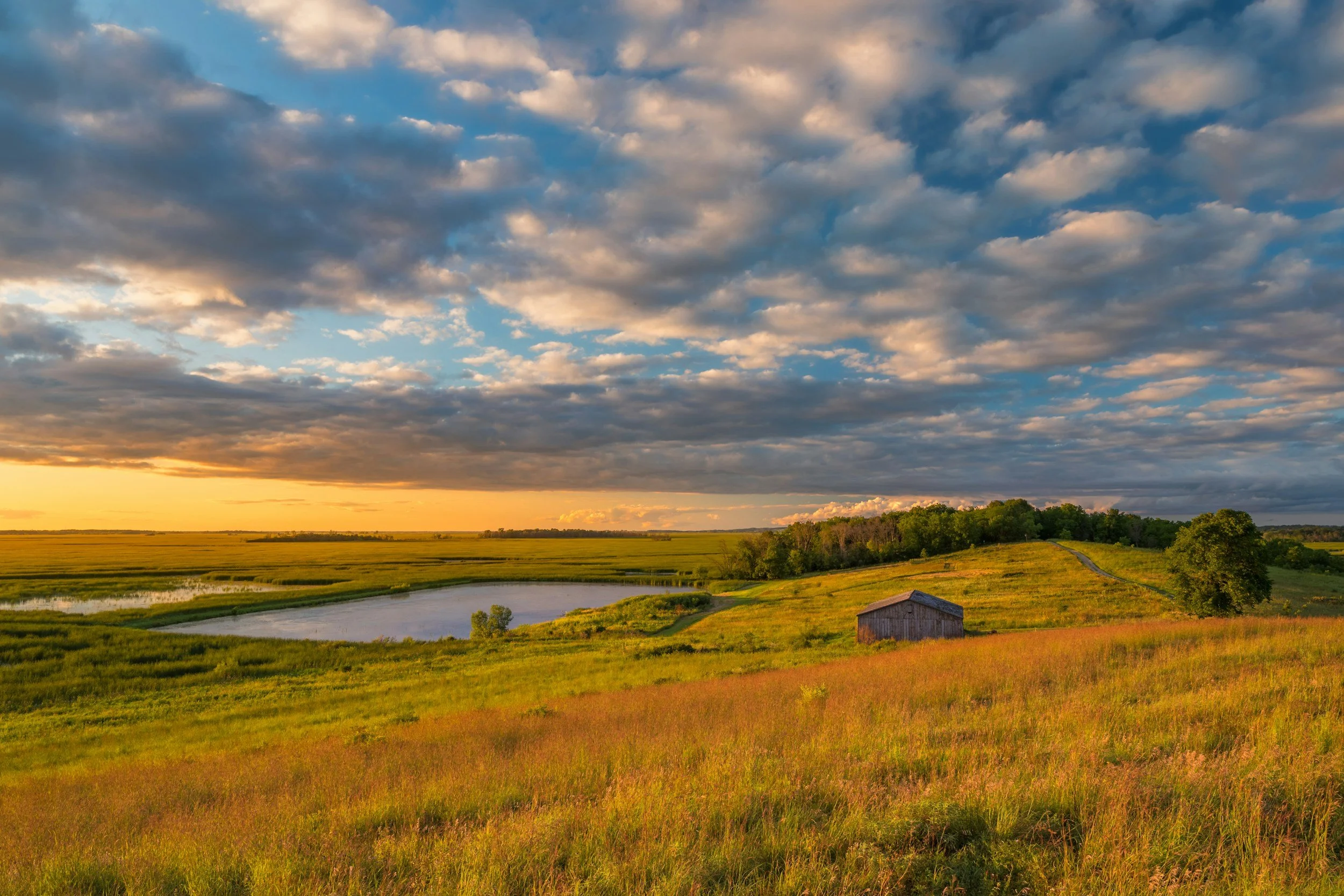
Years later, when life tested me again through my daughter's diagnosis and my wife's cancer, that same framework would become my lifeboat — my way to navigate chaos and steer toward purpose.
Part 2 The Years I Lost Control
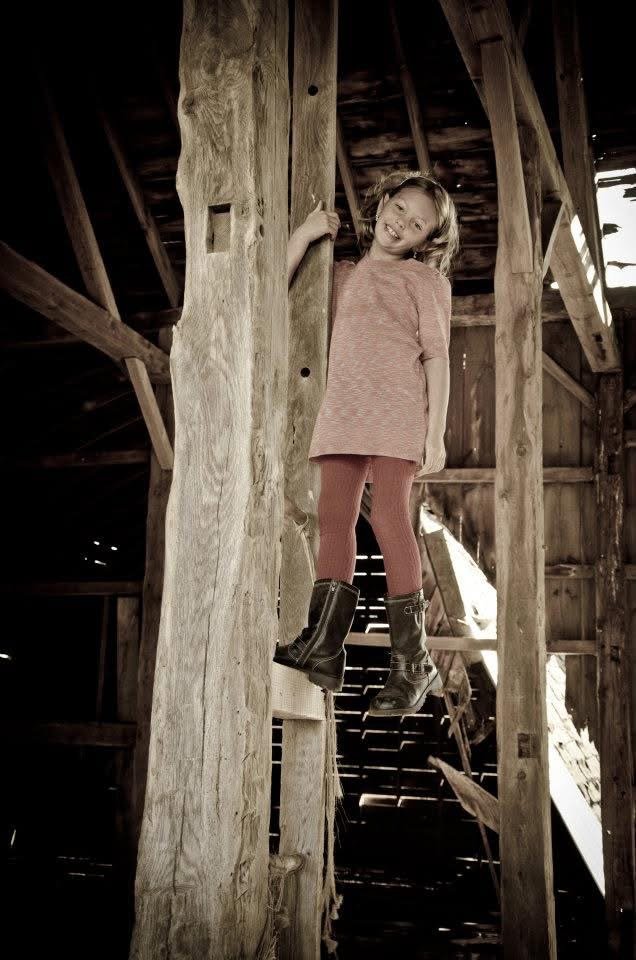
Before the diagnosis — a fearless girl who loved to climb higher
When My Daughter's World Changed
Years later, I felt that familiar helplessness again — the same loss of control I'd known as a teenager — when our daughter, Marina, started to stumble on her own path. She was eight years old when it began.
We had taken our kids to Disney World, just a normal family trip. But halfway through the day, Marina started to limp. She said her hips hurt, and before long, she couldn't walk. We chalked it up to excitement, heat, and exhaustion. We rented a wheelchair so she could still experience the magic — not knowing it would be the first of many she'd need.
What followed were years of doctors, testing, and sleepless nights. My late wife, Kathryn, became a force of nature — researching, calling specialists, refusing to stop until someone gave our daughter answers. Between hospitals in Milwaukee and Children's Hospital in Madison, we finally heard the words that would change everything:
- Central Core Muscular Dystrophy -
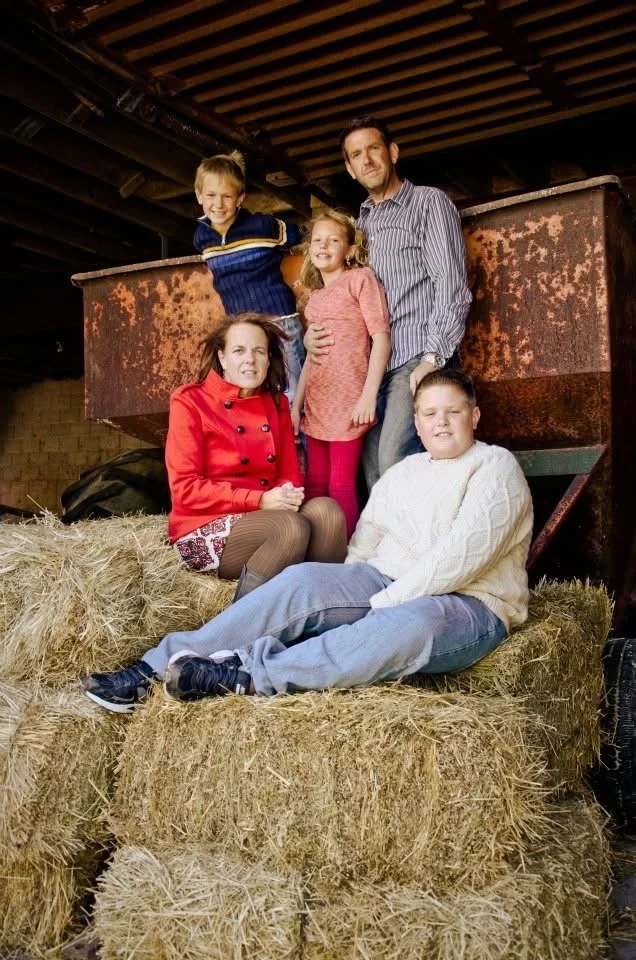
Back when life still felt ordinary — before we learned how strong we could be.
I'll never forget the silence in that room — the kind where the clock still ticks but time stops anyway. Every instinct in me wanted to fix it. To trade places. To carry her pain. To take the weight off her tiny shoulders.But I couldn't change the diagnosis.
What I could do was help her build a plan — a roadmap for independence, courage, and belief. We decided this wouldn't define her life; it would simply reshape it.
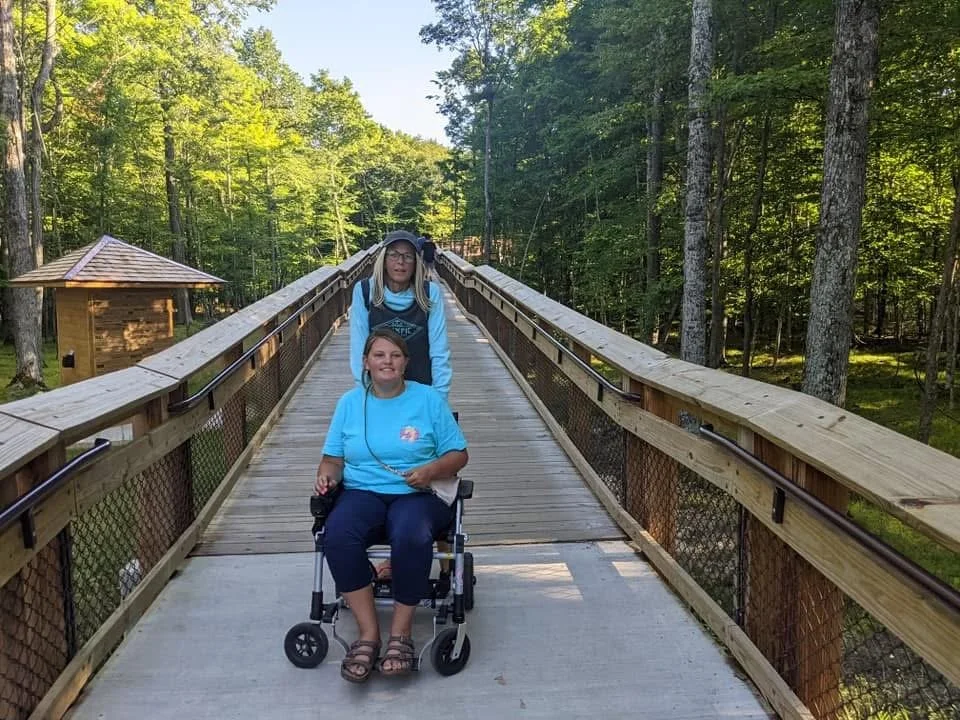
Years later Mom & Daughter— strength redefined.
Together, we learned that gravity doesn't always win. We learned that even in a wheelchair, you can still rise. We learned that strength isn't only in muscles — sometimes it's in the soul.
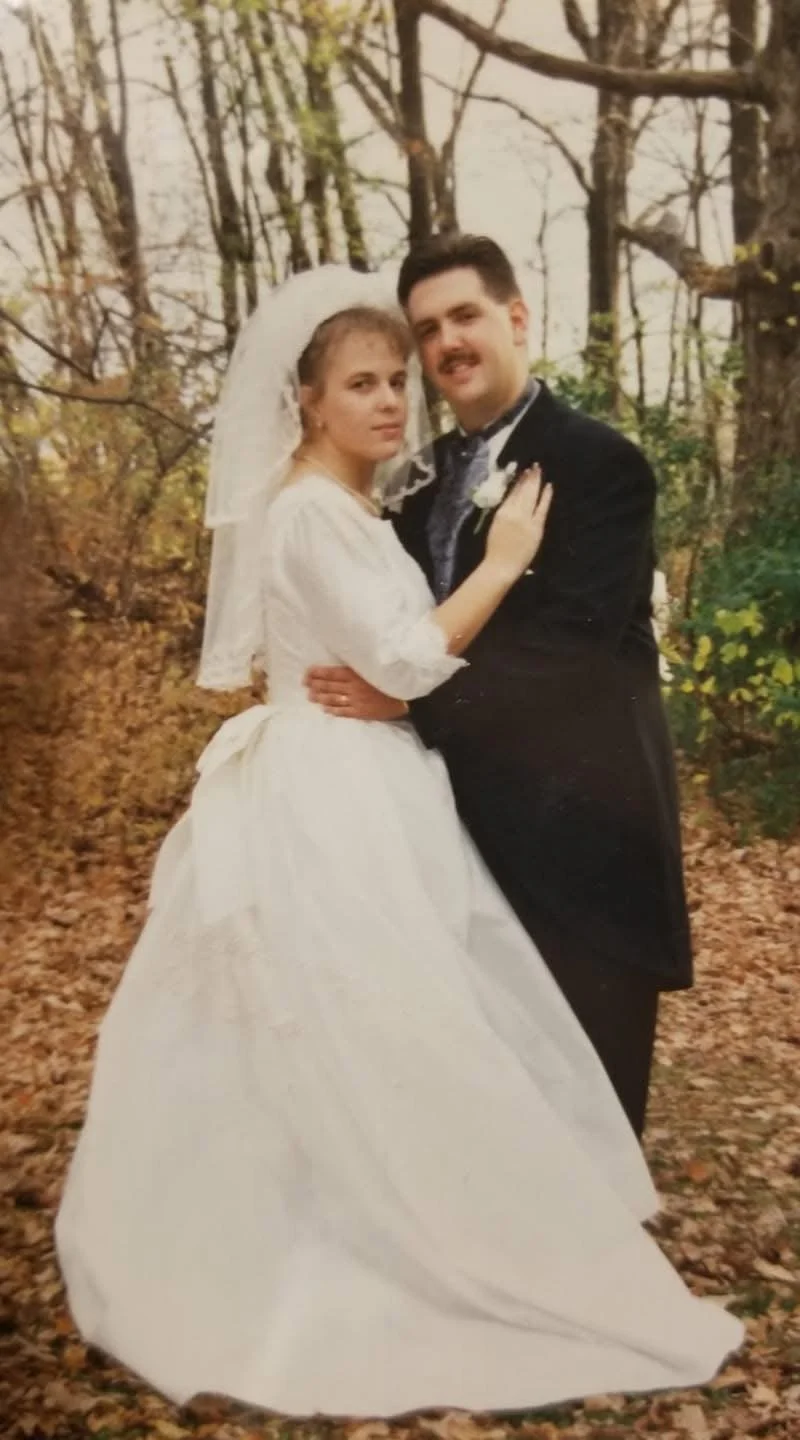
She was my first love.
She brought a Sesame Street coloring book to my hospital bed when I was sixteen. I didn’t know it then, but that small act would change everything.
Part 3 The Years I Lost Control
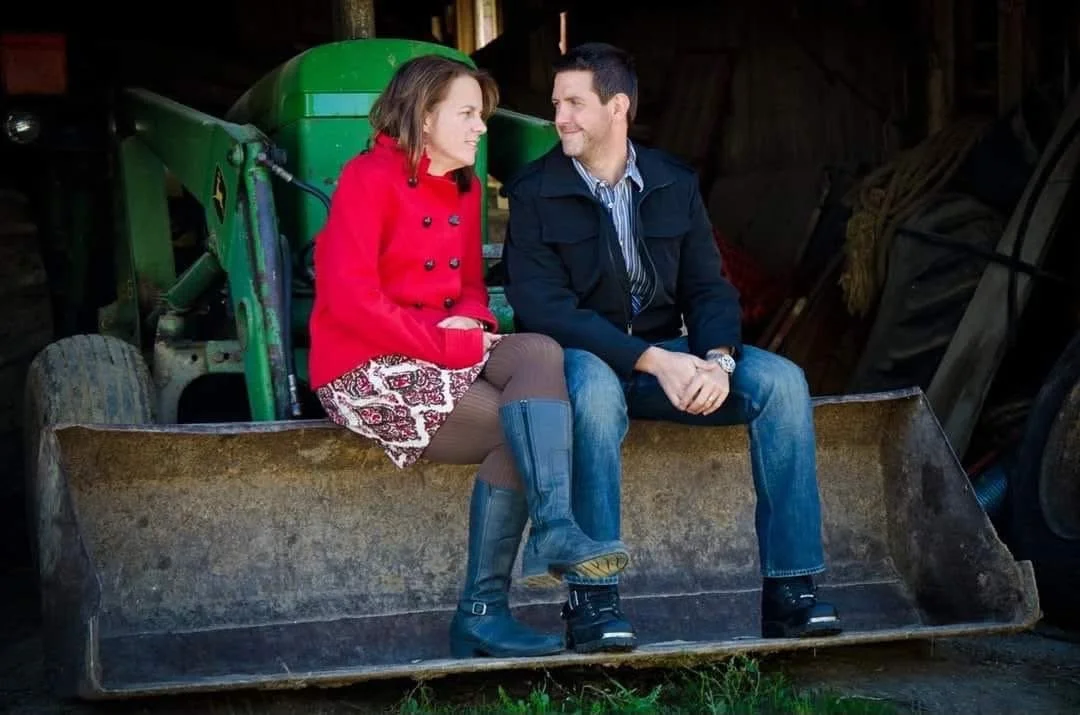
Our ordinary, extraordinary life.
Kathryn's Story — The Third Storm
Kathryn and I had been together almost our entire lives.
I was fourteen when we started dating. And when I turned sixteen and landed in a hospital blind and deaf, she showed up with a Sesame Street coloring book — a small, silly gift that made a terrified teenager smile again. She didn't bring advice or sympathy. She brought presence.
She became my constant.
My steady place.
My best friend.
And eventually, my wife.
We built a life that wasn't perfect, but it was real — full of laughter, raising our three kids, and building dreams that looked a lot like normal, beautiful, everyday life.
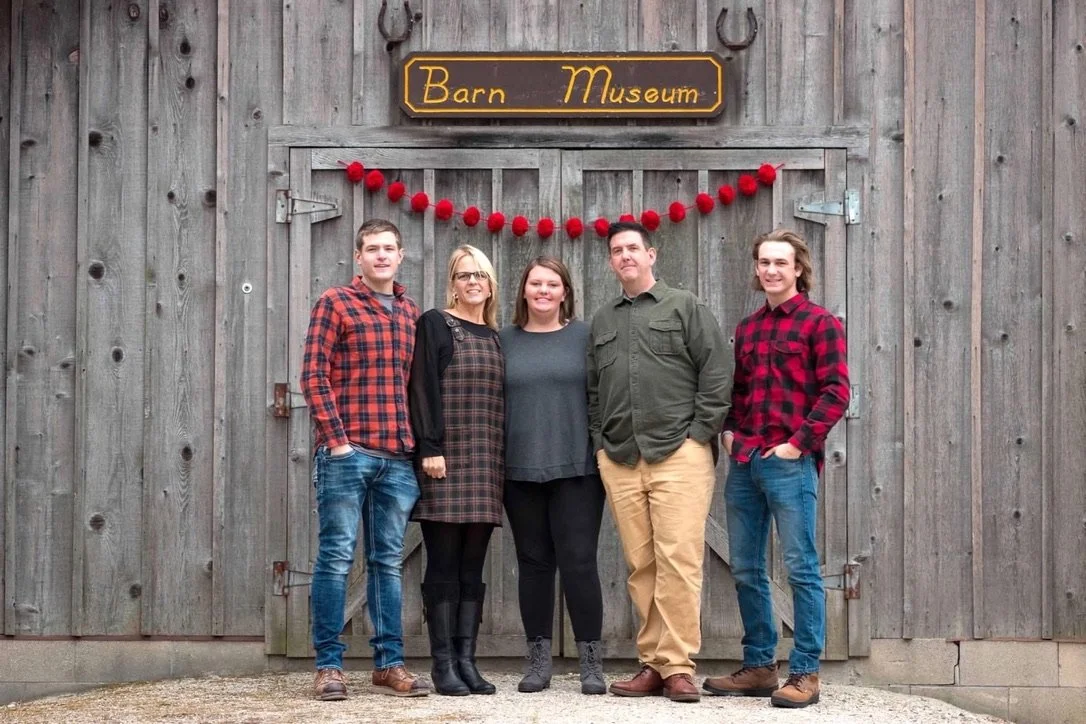
The barn family photo — the last one before illness began.
And then, during the heart of COVID, the world went quiet again.
Kathryn was diagnosed with
Stage 4 colon cancer — terminal.
I can still hear the way the doctor's voice softened when he said the word "protocols," as if softening the tone would soften the blow. We were told to wait for staffing, to fill out forms, to be patient — as if time was something we had. It felt like steering through fog with a broken compass.
But Kathryn…
Even then…
She stayed calm.
Strong.
Graceful.
I had promised her we'd build a home for our future. Instead, we were learning a new language — one made of scans, infusion schedules, and statistics we never wanted to understand.
We were suddenly living between hospital rooms and hope.
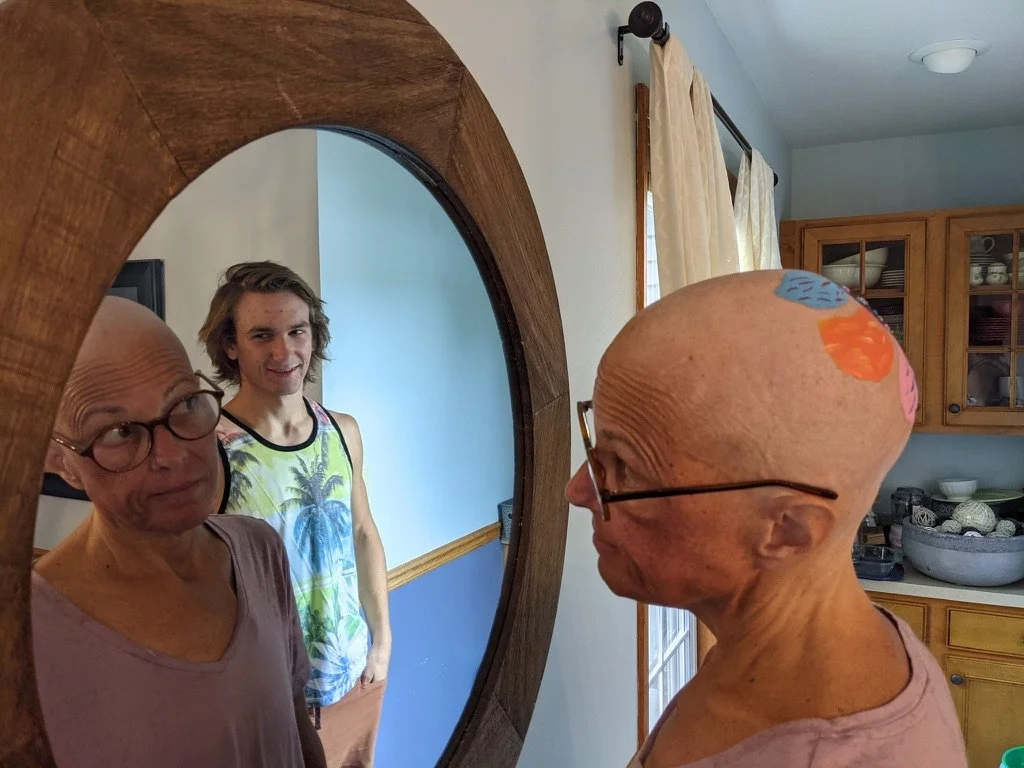
When beauty took on new meaning.
There's a picture from August 2021 that captures her completely. Her hair was gone, so her kids painted flowers across her scalp. She stood in front of the mirror, smiling — still beautiful, still unmistakably Kathryn.
That was her: defiant, dignified, even as her body fought against her.
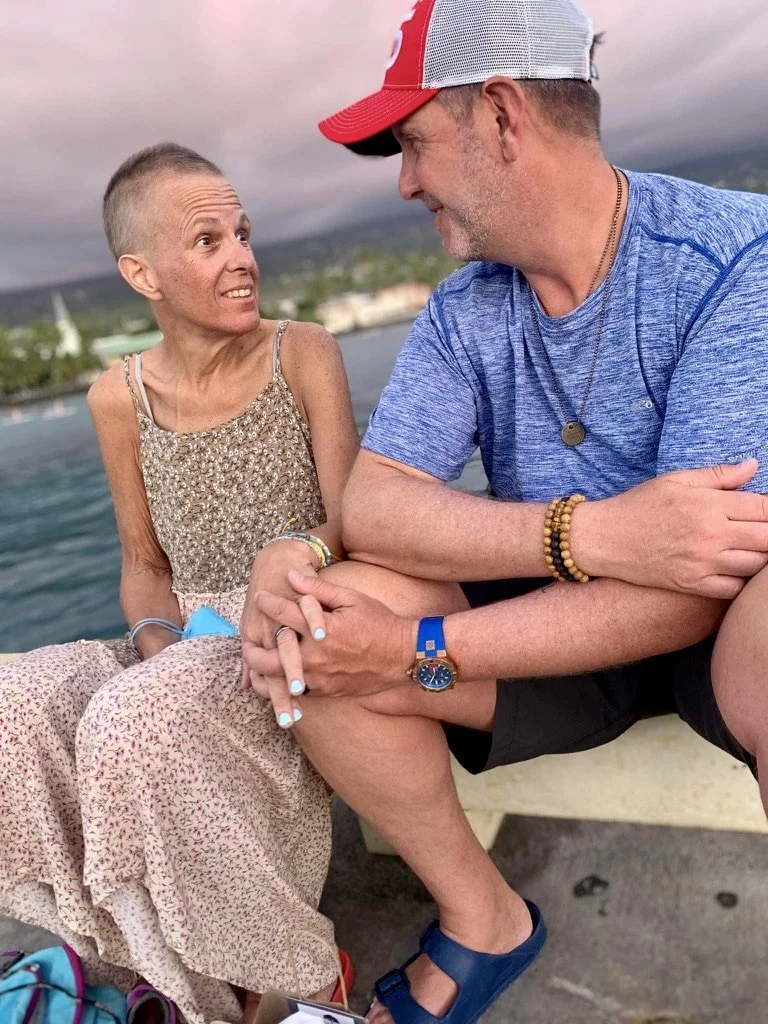
And then, in February 2022, we took one last trip together — Hawaii.
The air was warm. The ocean calm. We both knew what the calendar wasn't saying out loud. I slipped into a small shop and bought two simple rings. Later, on a quiet dock overlooking the water, I asked her:
"Will you marry me again?"
She laughed — that beautiful, contagious laugh — and told me I still made her heart race. We renewed our vows knowing our time was short… but our love eternal.
Less than 90 days later, she'd enter hospice at our home.
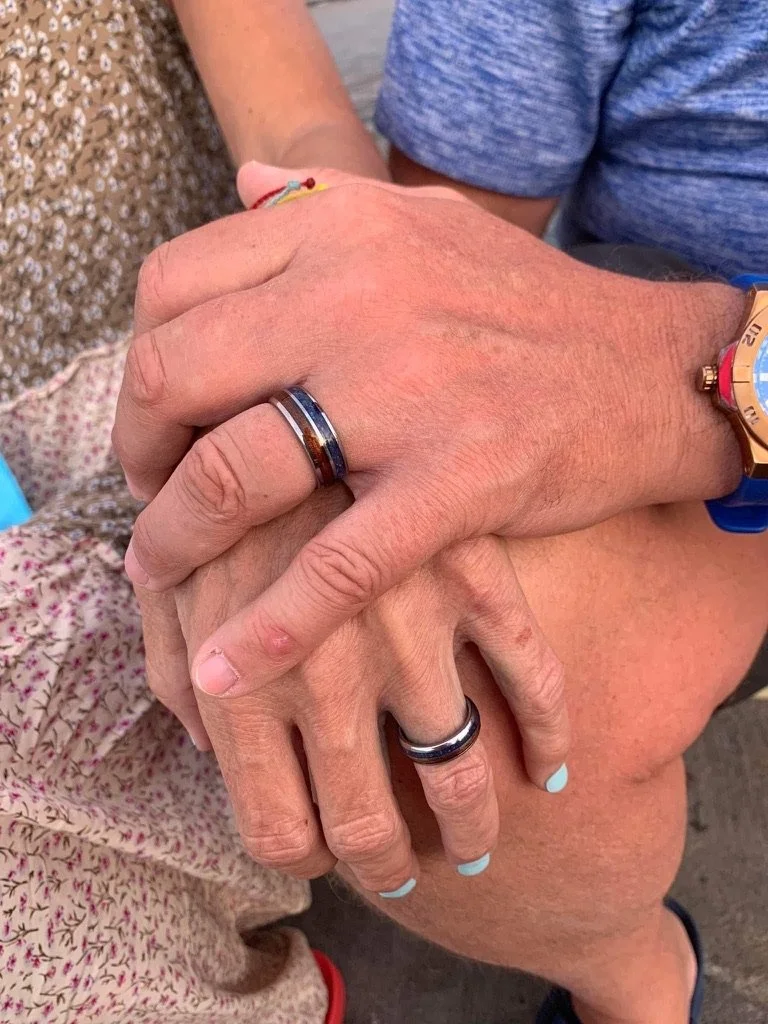
Two rings. One promise. Until the end.
Kathryn passed away
on Monday evening,
May 23rd, 2022,
at 6:02 p.m.
She took her final breath in our own bed, surrounded by our three children and our dog. Each of us was touching her — holding her — as she slipped from this world to the next. It was heartbreak and holiness all at once. Not many people get to leave this world on their own terms, but she did — calm, dignified, and still teaching us how to live beautifully right until the end. Even in dying, she showed us how to love with grace. That was the third time I lost control — but also the moment something new was born. Through her strength, I started to build something bigger: a purpose.
"Love doesn't end when life does.
It simply changes direction."

Life turns without warning.
Sometimes slowly,
sometimes all at once.
One phone call. One symptom. One diagnosis. One breath you wish you could take back. After three storms — my illness, Marina's diagnosis, and Kathryn's battle with cancer — I realized something that would shape the rest of my life:
When the world takes your control,
you don’t have to keep it all together.
You just need an anchor.
Somewhere between the hospital corridors, the wheelchairs, and the waiting rooms, I began to see a pattern. Not in the pain — but in the rebuilding.Every time my life collapsed, I rebuilt it using the same four anchors:
Health Family Purpose Finances
Those weren't just ideas. They were survival tools. They were the only parts of life you can actively steady when everything else falls apart. And over time, those anchors became something more —