When You Forget to Put Yourself On The List.
A Life Pillars reflection for caregivers & grievers who’ve been holding their breath too long.
Written by Marc Messinger

There's a moment every caregiver reaches — though most never dare to say it out loud — when you realize you've disappeared from your own life.
For me, that moment didn't show up in a dramatic breakdown or a single shattering event. It built slowly, quietly, in the dark hours of morning during the routine Kathryn and I created to get to the Cancer Treatment Center (now called City of Hope) in Zion, Illinois.
Every day began exactly the same.
4 a.m. alarm. A splash of cold water on my face. Half a cup of coffee — not for enjoyment, but for armor.
Back then, I thought I was simply waking up.
It took me years to understand that what I was really doing was preparing to enter the water.
Because that's what caregiving became for me — stepping into a deep, cold, unpredictable body of water every single morning.
Before we walked out the door, I would mentally wrap a rope around my waist. I didn't know it then, but that rope held everything — fear, faith, love, dread, duty, identity, responsibility. Then I would gently imagine placing Kathryn — my wife, my high school sweetheart, my partner since I was fourteen — into a life raft behind me. She was fragile but still brave. Hopeful but terrified. Counting on me.
Then I'd step into the water.
Toe first. Then ankle. Then waist-deep.
And the moment the water was high enough, I'd start paddling — laser-focused, arms swinging, muscles tight — because it felt like if I didn't paddle, we'd both drown.
The drive to Zion always felt like that crossing. Fog, rain, darkness… it didn't matter what the sky handed us. Kathryn's anxiety always grew the closer we got, and sometimes her fear turned into sharpness or anger. I never blamed her. When you're living every day inside the unknown, your emotions come out sideways.
As her fear rose, my paddling got harder.
Appointments. Scans. Infusions. Cancellations based on her labs. Insurance battles. Medication delays. Infected ports. Pain…….Fear………Exhaustion.
Every mile, every new update, every sudden change felt like another wave slamming into the raft.
And when you're the one tied to the raft, you push through anything.
You swim around obstacles. You shove debris out of the way. You tighten your grip on the rope and keep going because stopping is not an option.
That's the part people don't understand about caregivers:
When you're the one paddling, you're also the one taking the waves.
Sometimes I gave what I call "verbal shrapnel" — sharp words, quick tones, short answers — not out of anger, but because my nerves were frayed. And when family didn't understand why I was so tense, or why I set strong boundaries, or why I did things my way, I didn't know how to explain it.
They weren't in the water with me. They weren't tied to the raft. They weren't the ones trying to get Kathryn across the day.
The waves weren’t just around the raft. They were breaking inside me.
Because caregiving doesn't just drain you — it erases you. Bit by bit. Piece by piece.
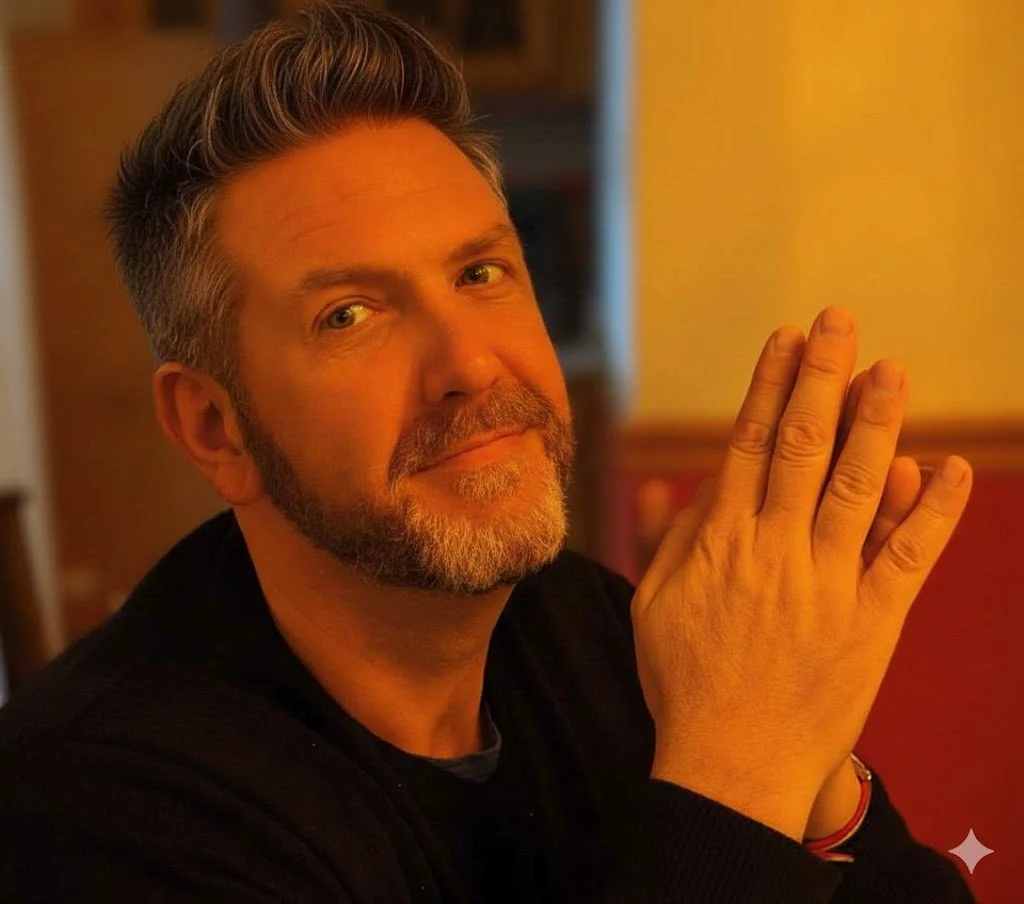
While Kathryn went through appointments, I'd slip into the bathroom and look into the mirror. Some days, I genuinely did not recognize the man staring back. My eyes looked older. My face looked worn. Something in my chest felt hollow — like the part of me that used to know who I was had gone silent.
Meanwhile, life back home didn't stop.
Kids needed guidance. My clients needed support. My staff needed direction. Life demanded leadership from a man who barely remembered himself.
And then, after whatever the day decided to hand us — a denied treatment, a terrifying scan, an angry outburst, a wave of pain — we'd reach the distant shore of nightfall.
Reaching the Shore
At the end of each day, after whatever that day had handed us, I'd finally "reach shore."
I would lift Kathryn out of the raft, carry her up the sand, walk her into the house, guide her into our bed.
The day was done.
But my arms didn't stop paddling.
10 p.m. 11 p.m. Midnight.
Even when the house went still, my body stayed braced for the next storm.
That was survival mode.
And it took a toll on my Health Pillar — mentally, physically, emotionally, spiritually. All of it.
Sometimes I'd pour a finger or two of vodka with a little Sprite trying to quiet my mind.
But it never worked.
My body was still in the water. Still paddling. Still fighting currents no one could see.
And then the next morning, somewhere around 3 or 4 a.m., I'd start all over again.
That's why caregivers lose themselves.
Not because they're weak. Not because they're careless with their own needs. But because loving someone through illness is relentless.
Caregiving is the only job where:
Stopping feels dangerous,
Resting feels selfish, and
Taking care of your own needs feels impossible.
And little by little, in the fog, in the paddling, in the midnight staring at the ceiling… you disappear.
When Kathryn Died
Kathryn passed away on May 23rd at 6:02 p.m.
In our bed. Next to me and our 3 kids.
There's no elegant way to describe that moment. So I won't try.
Just imagine paddling — harder than you knew a human could — and then suddenly the water goes still.
No waves. No wind. No sound. Just silence.
But caregiving didn't end that day. It changed direction.
The week that followed was a different kind of paddling:
Meeting with the funeral home,
Writing her obituary,
Planning the service,
And lifting my three children into their own grief in the only ways their hearts could handle.
I was still paddling. Just pulling a different raft.
The Backyard Moment (The Bottom of the Boat)
The following Saturday, my kids were gone, each grieving in their own way.
I was alone in the backyard.
The quiet was crushing.
For the first time in years, I didn't know what to do.
There was no appointment. No forms to fill out. No crisis to fix. No raft behind me. No direction to paddle.
I wasn't paddling for Kathryn. I wasn't paddling for the kids. I wasn't paddling for anyone.
I was just… lost.
That's what bottom-of-the-boat survival mode feels like:
A fog so thick you don't even know which way the shore is.
And the truth is:
Even after she died, I didn't know how to stop paddling.
I don't know if that went on for a week, a month, or a year.
And to be honest, I still feel it sometimes.
Caregiving changes you. Permanently.
Your brain learns to live in crisis. Your body learns to stay on high alert. Your heart learns to brace for impact even when nothing is coming.
The Turning Point
For me, the turning point didn't come in one dramatic moment.
It wasn't a breakdown or some lightning-bolt revelation.
It was much quieter than that.
One morning — long after Kathryn had passed — I looked in the mirror and realized I didn't know the man staring back at me.
I had survived. But I wasn't living.
And I finally understood:
If I didn't put my name back on the list, I wouldn't survive long enough to help anyone else.
Something had to change.
Not out there in the world. In here — inside me.
Reclaiming Yourself (Why the Health Pillar Typically Comes First)
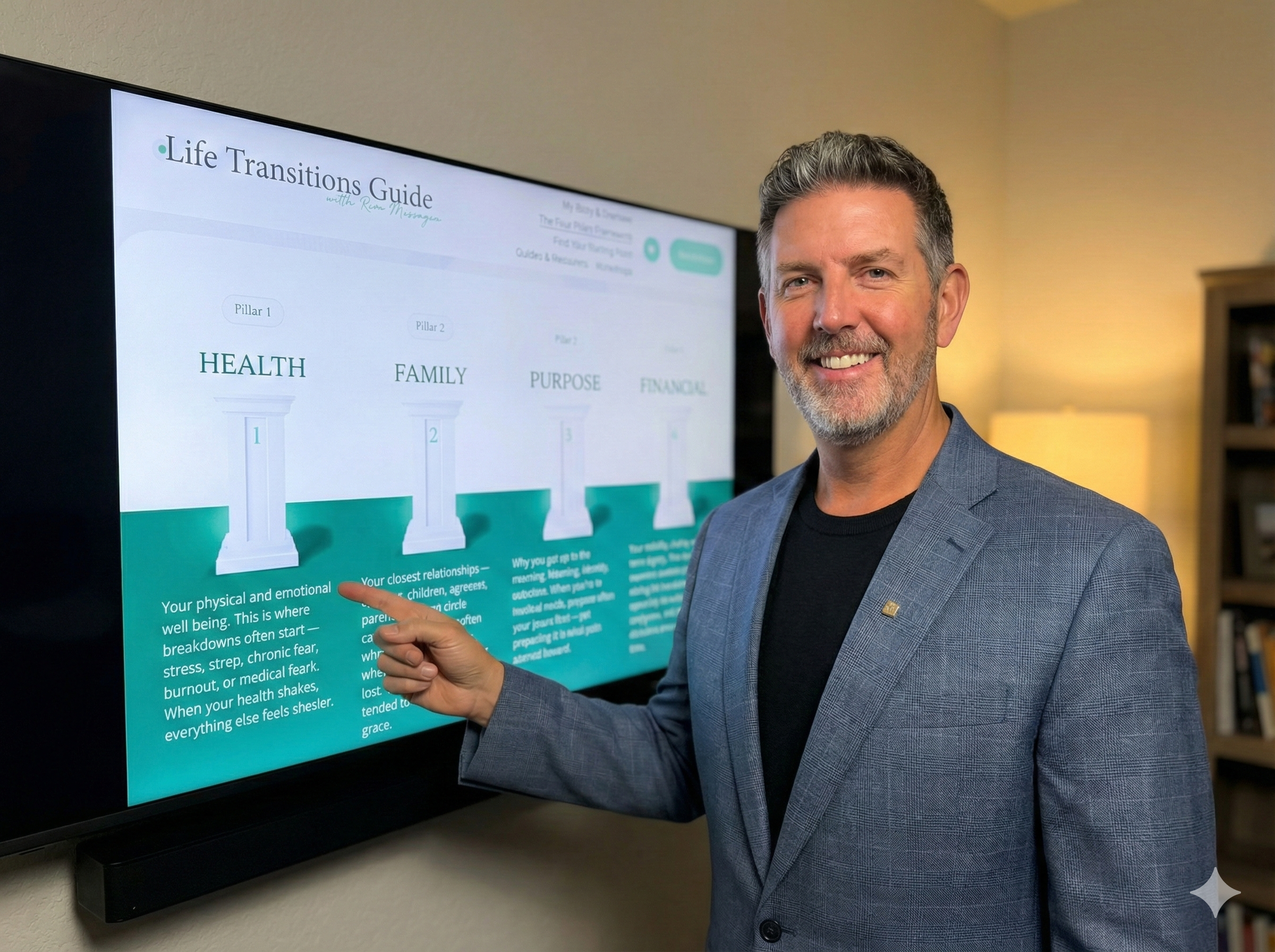
In my Life Pillars framework — Health, Family, Purpose, Finances — I've learned something simple but stubborn about myself:
My mental health never improves unless my physical health improves first.
That's my starting point. My foundation. My gateway back to myself.
But here's the important part:
Your starting point might be different — and that's exactly how this works.
Not everyone begins in the Health pillar.
Some people begin with Purpose, because purpose gives their pain a direction. Some start with Family, because reconnecting with their people is the only way they can breathe again. Some begin with Finances, because clarity around money is the only thing that lets them sleep at night.
The Life Pillars aren't a checklist — they're a compass.
You simply start with the pillar that's calling your name the loudest.
For me, my mental health never improves unless my physical health improves first.
That's my starting point. My foundation. My gateway back to myself.
There came a point where I said:
"The only time that has ever truly belonged to me… is the morning. I need to reclaim that."
So I made a promise:
I was going to reclaim the first 90 minutes of my day.
Not for perfection. Not for productivity. But for presence.
For me, that meant: drinking water, moving my body, and setting a simple intentional goal for that day.
Tiny things. Small wins. Repeated on purpose.
It didn't stop the paddling. It just steadied my hands enough to keep me from sinking.
And I'm not going to pretend the story ties itself up in a perfect bow.
Even now, I still feel the tug of caregiver mode. I still catch myself paddling hard in moments that don't require it. Years of crisis rewired my instincts — and instincts don't flip off like a switch.
But I've learned this:
You can't clear the fog by force.
But you can find one small break in the horizon — a sliver of light, barely visible, just enough to know you're still pointed in the right direction.
Sometimes that's all you need.
Not the whole map. Not perfect visibility. Just the next few strokes… And a glimpse of where the water opens up ahead.
Your Turn: Put Your Name Back on the List
This isn't just my story.
If you're reading this, there's a good chance you've been paddling too.
Maybe you're caregiving. Maybe you're grieving. Maybe you're holding up an entire family, or a career, or a life that looks fine on the outside but feels like chaos on the inside.
So let me ask you a few questions:
Are you exhausted physically?
Are you exhausted emotionally?
Which one needs your attention first?
You don't have to overhaul your whole life. You don't have to design a perfect routine. But you do need one small act of reclaiming yourself.
For you, it might not be the first 90 minutes of the day.
It might be:
A 10-minute walk after dinner,
Sitting in your car for five quiet minutes before you go inside,
Journaling for a few minutes before bed,
Or simply eating one real meal without rushing.
The time of day doesn't matter. The size of the action doesn't matter.
What matters is the message beneath it:
"I'm back on my own list. My life matters too."
Start with one small win in your Health Pillar — physical or mental.
Pick the one that feels most urgent, and give yourself permission to care for it the way you would care for someone you love.
Because you are someone you love. Or at least, you used to be. And you can be again.
A Compass While You Paddle
If you're still in the fog, still in the middle of the water, still paddling… I want you to know this:
You don't have to figure it all out today.
On my website, you'll find other tools and reflections — including a piece called: "Your Compass: A Simple Guide for Life's Turning Points."
Think of this article you're reading now as someone quietly sitting in the boat with you, saying:
"I've been there. You're not crazy. You're not weak. You're just tired."
And think of that Compass guide as something you can hold in your hands when you're ready to ask: "Where do I go from here?"
Together, they're meant to help you paddle with more purpose, not more pressure.
If you've read this far, hear this clearly:
You don't need to be perfect. You just need to be present.
Put your name back on the list. Reclaim one small corner of your day. Let your Health Pillar be the first stone you set as you rebuild.
And as you do, I hope you'll discover — slowly, quietly, in your own time — what I've had to learn the hard way:
It's a Good Life.
— Marc Messinger
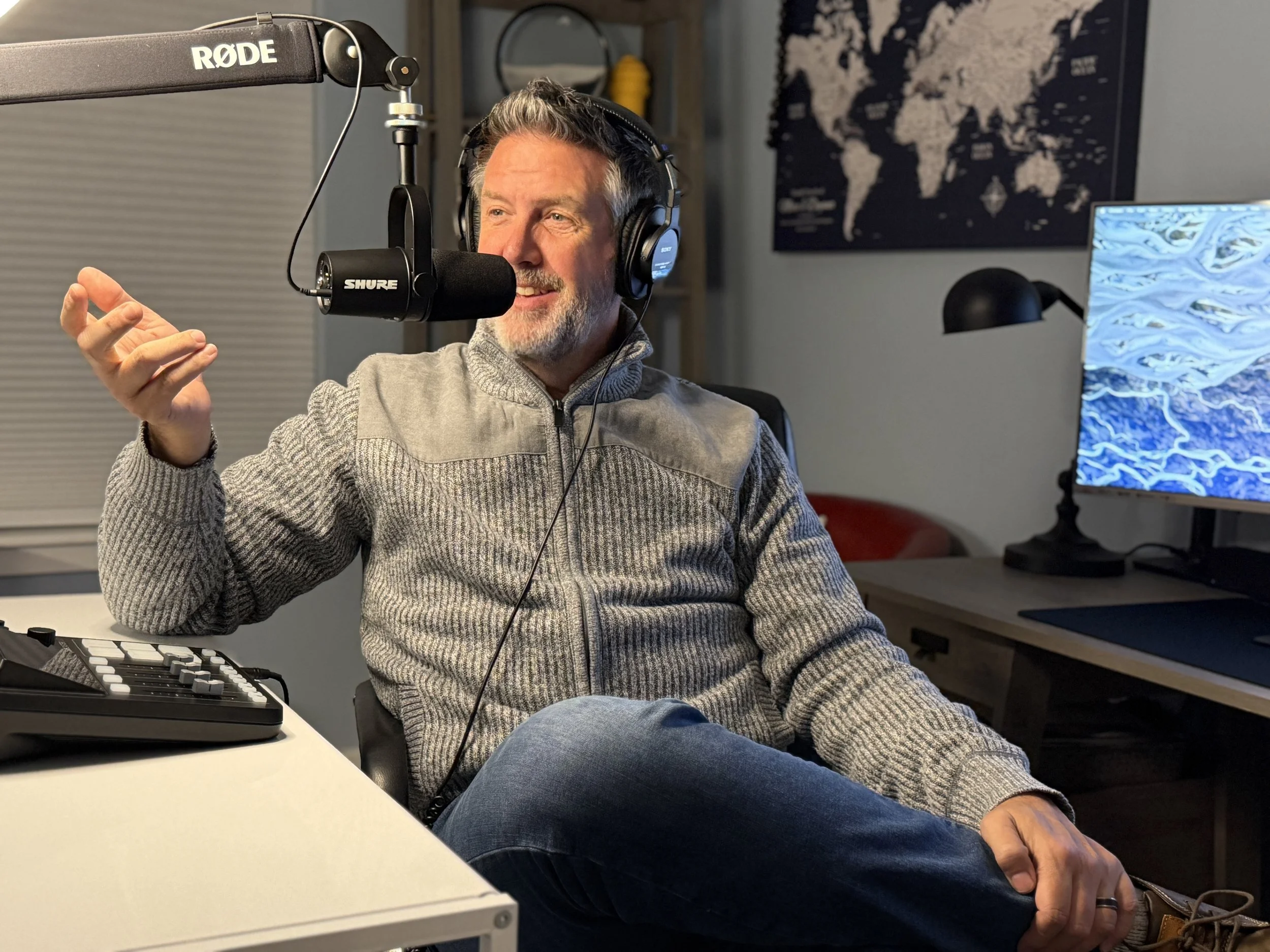
If this article resonated with you, there's more on the site — articles, four recorded episodes, and a short assessment called Find Your Starting Point that tells you which area of your life needs attention first.
mylifetransitionsguide.com/articles-and-podcasts
You're also welcome to reach me directly at connect@mylifetransitionsguide.com or 414-416-1982
Browse More